
Updated: August 28, 2026. The information in this article is current as of this date.
The federal government has initiated swift action to restrict concentrated 7-hydroxymitragynine (7-OH), meaning that if you or a loved one are regularly using these highly potent retail products, it is important to understand the changing legal landscape and seek medical guidance if dependence or withdrawal is a concern. In July 2026, the Drug Enforcement Administration (DEA) initiated temporary scheduling actions involving concentrated 7-OH and three related substances. As of August 28, 2026, the proposed temporary scheduling of 7-OH above a specified threshold has not yet taken effect, and the federal comment period on that threshold has been extended through September 10, 2026. The proposed action targets products with elevated concentrations of 7-OH while excluding botanical kratom products that contain naturally occurring 7-OH below the specified threshold. For those struggling with dependency on these potent extracts, seeking professional care at a specialized addiction treatment center is the safest and most effective way to manage withdrawal and achieve long-term recovery. Understanding the timeline, the specific chemicals targeted, and the resources available for support will help you navigate this transition safely.
Key Takeaways on the 7OH Ban
- The DEA targets concentrated 7-OH: The federal government has proposed temporarily placing products containing concentrated 7-hydroxymitragynine above a 0.05% dry weight threshold into Schedule I.
- The federal 7-OH scheduling decision is still pending: As of August 28, 2026, the proposed temporary scheduling of concentrated 7-OH has not yet taken effect. HHS has extended the public comment period concerning the proposed 7-OH threshold through September 10, 2026.
- Natural leaf remains separate: Traditional botanical kratom leaf that stays below the 0.05% 7-OH threshold is explicitly excluded from this federal restriction.
- State laws vary significantly: Several states prohibit or restrict kratom, while others have adopted laws specifically targeting concentrated 7-OH products or regulating the sale of kratom products.
- Medical treatment is available: Comprehensive clinical care, including specialized kratom addiction treatment, provides a safe pathway to overcome extract dependence.
What is 70h (7-Hydroxymitragynine) and Why is the DEA Targeting It?
Understanding what is 70h (a common search term spelling for 7-OH) requires looking at the chemical makeup of the kratom plant, Mitragyna speciosa. The raw leaves of this Southeast Asian plant contain dozens of active alkaloids, with mitragynine being the most abundant. In its natural form, 7-hydroxymitragynine exists only in minute, trace amounts. Research indicates that dried kratom leaves contain 7-OH at concentrations between 0.003% and 0.04% of the total plant weight. At these natural levels, the compound contributes to the plant’s overall effects but does not produce the intense, concentrated high associated with isolated substances.
In recent years, manufacturers discovered methods to chemically oxidize mitragynine in laboratory environments. This process allows them to synthesize or highly concentrate 7-hydroxymitragynine. The resulting products, marketed as 7-OH or 7-hydroxy tablets, shots, and sublingual strips, possess a chemical structure that binds strongly to the brain’s mu-opioid receptors. In fact, clinical studies indicate that isolated 7-OH is significantly more potent than morphine, making it highly addictive and physically challenging to stop using once dependency develops.
The U.S. Food and Drug Administration has raised serious public safety concerns regarding these manufactured formulations. Because these products bypass normal pharmaceutical safety standards, retail consumers frequently ingest doses that are far higher than anything found in nature. According to reporting from the Centers for Disease Control and Prevention, calls to poison control centers regarding kratom and concentrated alkaloids have risen steadily. This trend prompted federal regulators to step in and treat these isolated chemical formulations with the same level of restriction as other high-risk opioids.
Understanding the 7OH Ban and Federal Kratom Ban Timelines
The federal government officially initiated the regulatory process to classify concentrated 7-OH as a Schedule I substance in July 2026. The Drug Enforcement Administration filed two distinct Notices of Intent in the Federal Register, outlining a strategy to remove high-dose extracts from retail shelves. The first notice focuses on products containing 7-OH above a specific concentration threshold. Specifically, any product containing more than 0.05% of 7-hydroxymitragynine by dry weight or more than 1.00 milligram of the compound per individual article would be covered by the proposed temporary Schedule I placement.
The second Notice of Intent targets three specific synthetic chemical derivatives that do not exist naturally in the kratom plant. These compounds are mitragynine pseudoindoxyl (MP), MGM-15, and MGM-16. Regulators identified these synthetic formulations as highly potent compounds designed to mimic the effects of traditional opioids while evading existing laws. By temporarily scheduling these synthetic derivatives while separately pursuing the proposed scheduling of concentrated 7-OH, the federal government aims to prevent manufacturers from exploiting legal loopholes with slightly altered chemical designs. However, the proposed temporary scheduling of 7-OH above the specified threshold has not yet taken effect as of August 28, 2026. HHS extended the public comment period on the proposed threshold through September 10, 2026.
This targeted action creates a clear division between retail botanical products and manufactured extracts. Traditional raw leaf powder, plain leaf capsules, and natural teas generally fall well below the 0.05% 7-OH threshold. Consequently, these traditional options remain unscheduled at the federal level for now. The scheduling action explicitly isolates the high-potency tablets and liquid shots that have flooded gas stations and specialty smoke shops over the past several years.
Determining the 7oh Ban When Will It Start Date and Transition Timeline
As of August 28, 2026, there is no confirmed effective date for the proposed federal temporary scheduling of 7-OH above the specified threshold. Although the DEA initiated the temporary scheduling process in July 2026, the scheduling action has not yet taken effect.
On August 26, 2026, HHS extended the public comment period concerning the proposed 7-OH threshold through September 10, 2026. The comments will be provided to the Attorney General for consideration. If the DEA subsequently issues a temporary scheduling order, covered 7-OH substances would become subject to the federal restrictions that apply to Schedule I controlled substances.
To establish the permanent status of these substances, the Department of Health and Human Services and the DEA must engage in a formal rulemaking process. This process includes opportunities for public comments, scientific hearings, and administrative reviews. Concurrently, the Office of the Assistant Secretary for Health opened a Request for Information in July 2026 to gather scientific feedback on whether the 0.05% threshold is chemically appropriate. While permanent scheduling would involve a separate regulatory process, the proposed temporary scheduling of 7-OH above the specified threshold remains pending as of August 28, 2026.
The Step-by-Step DEA Emergency Scheduling Process
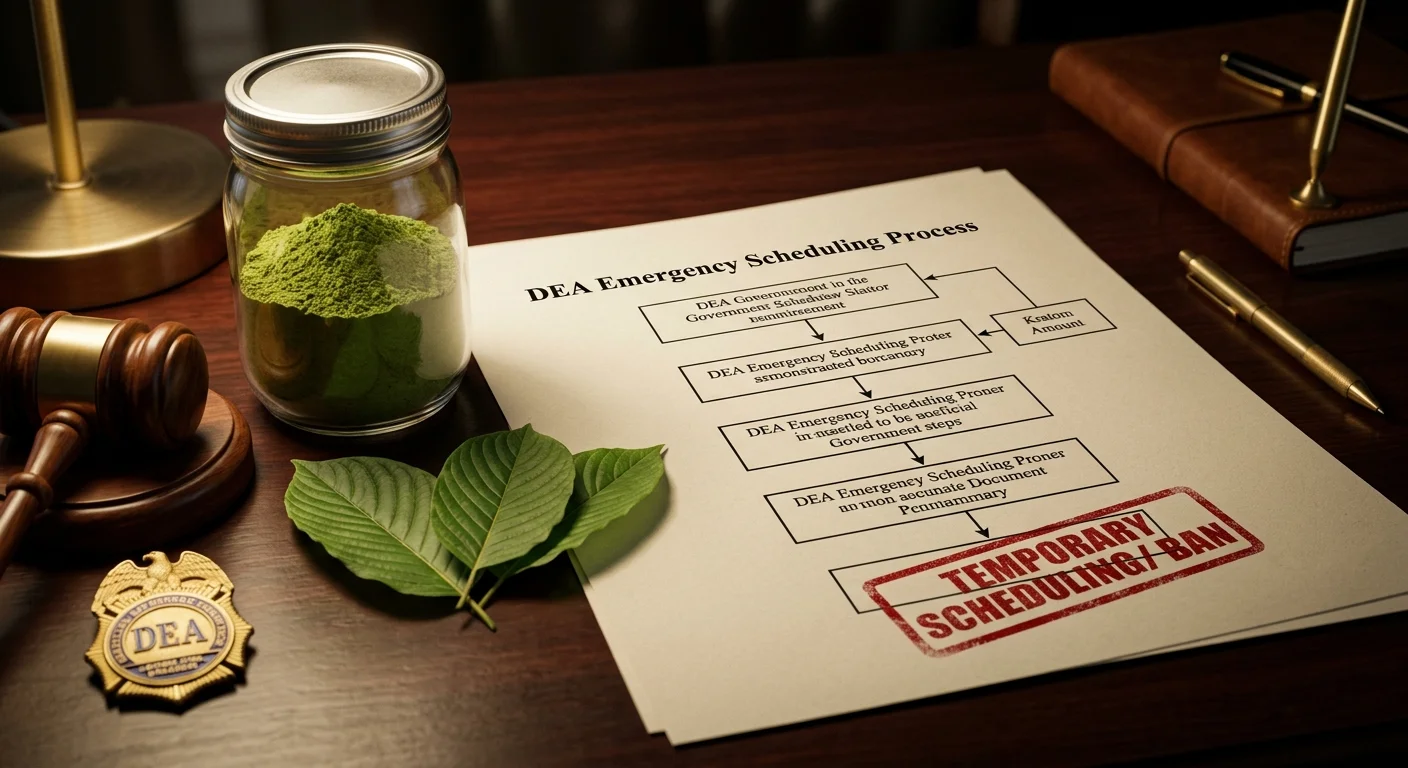
The process of emergency scheduling involves a coordinated effort between health administrators and law enforcement. The federal government utilizes this mechanism when a substance poses an imminent hazard to public safety. The following steps outline how the emergency scheduling of 7-OH progressed through the regulatory pipeline in 2026:
- Scientific Assessment: The Department of Health and Human Services analyzes the pharmacology, abuse patterns, and public health risks of concentrated 7-OH.
- Notice of Intent: The DEA files formal documents declaring the government’s intent to temporarily schedule the substance, which occurred on July 1, 2026.
- Federal Register Publication: The notices are published publicly, initiating the mandatory 30-day administrative waiting period on July 6, 2026.
- Information Gathering: HHS opened a Request for Information concerning the proposed 7-OH threshold and subsequently extended the public comment period through September 10, 2026.
- Temporary Scheduling Decision: After the federal review process, the DEA may issue a temporary scheduling order placing 7-OH above the specified threshold into Schedule I.
- Permanent Rulemaking: Over the subsequent 24 to 36 months, agencies conduct extensive studies to determine if the drug should be permanently restricted.
State-Level Kratom Ban Regulations Across the United States
Federal regulations establish a baseline for national policy, but individual states maintain the authority to pass stricter measures. The legislative landscape surrounding kratom is highly fragmented, with several states enacting complete prohibitions long before the 2026 federal action. Several states prohibit or restrict kratom, while others have adopted laws specifically addressing concentrated 7-OH products or regulating the sale and labeling of kratom products.
Other states have chosen a more targeted approach, focusing specifically on concentrated 7-hydroxy formulations while keeping natural raw leaves legal for adults. For example, Virginia enacted a law on July 1, 2026, that bans retail sales of concentrated 7-OH but permits the sale of standard botanical leaf to individuals who are 21 years of age or older. Similarly, Ohio banned synthetic and isolated 7-hydroxy products in May 2026, and Florida has classified concentrated 7-OH as a Schedule I substance since August 2025.
In contrast, more than 30 states have adopted versions of the Kratom Consumer Protection Act. These state-level frameworks do not ban the plant. Instead, they require manufacturers to register their products, submit to independent laboratory testing, provide clear labeling, and verify that buyers are of legal age. Additionally, Rhode Island made headlines by reversing its long-standing statewide ban in April 2026, showing that legislative trends can move in multiple directions simultaneously. Because local laws change rapidly, individuals should consult with local state authorities or legal professionals to confirm the current statutes in their area.
Comparing Kratom Forms and Regulatory Status
To help navigate these complex regulatory distinctions, it is helpful to look at how different products are classified under the upcoming federal rules. The following table highlights the differences between raw botanical options, processed extracts, and synthetic derivatives:
| Product Category | Typical 7-OH Content | Federal Status as of August 28, 2026 | Primary Regulatory Focus |
|---|---|---|---|
| Raw Kratom Leaf (Powder, Tea, Capsules) | 0.003% to 0.04% by dry weight | Unscheduled; State Laws May Apply) | Excludes natural botanicals below the 0.05% threshold |
| Standard Leaf Extracts | Variable (usually below 0.05%) | Unscheduled if below the 0.05% weight limit | Requires testing to prove compliance with concentration limits |
| Concentrated 7-OH (Tablets, Shots, Gummies) | Exceeds 0.05% concentration or 1.00 mg per article | Temporary Schedule I Placement Proposed; Not Yet in Effect | Targets highly processed, high-potency retail products |
| Synthetic Derivatives (MP, MGM-15, MGM-16) | Any detectable amount (fully synthetic) | Schedule I (Effective August 26, 2026) | Eliminates fully synthetic laboratory-made compounds |
The Clinical Reality of 7 Hydroxy Dependence and Finding Support
The high potency of isolated 7-hydroxymitragynine means that individuals who use these products regularly can quickly develop a severe physical dependence. Because 7-OH acts directly on the brain’s mu-opioid receptors, the body adapts to its presence much like it would to traditional prescription pain medications. When an individual attempts to reduce their dose or stop using these concentrated tablets, they often experience intense physical and emotional withdrawal symptoms. These symptoms can include muscle aches, severe abdominal cramping, profound anxiety, insomnia, drenching sweats, and overwhelming cravings.
Clinical experts warn that attempting to quit high-dose extracts without professional guidance can be dangerous and is highly likely to result in a return to use. A common professional mistake to avoid is attempting to self-treat extract withdrawal by shifting to other unverified botanical substances or unregulated retail products. This self-medication strategy frequently prolongs the cycle of physical dependence and increases the risk of accidental exposure to contaminated products. Instead, working with clinical professionals who understand the specific pharmacology of kratom alkaloids is essential for a safe and sustainable recovery.
Fortunately, evidence-based medical interventions are highly effective for managing 7-OH dependence. Research supported by the National Institute on Drug Abuse demonstrates that traditional opioid use disorder treatments, such as buprenorphine, can successfully stabilize brain chemistry, eliminate severe withdrawal symptoms, and block cravings for kratom products. By combining medical stabilization with professional therapeutic counseling, individuals can safely address the underlying causes of their substance use and build a solid foundation for long-term health.
Seeking Professional Help and Healing at New Growth Recovery

If you or someone you love is navigating the physical and emotional challenges of 7-OH or kratom dependence, you do not have to walk this path alone. The upcoming federal regulatory changes can feel overwhelming, especially if you are concerned about sudden withdrawal or losing access to a substance you have come to rely on. Seeking help from a professional treatment center ensures that you have access to a safe, supportive, and clinical environment designed to help you reclaim your life with dignity.
At New Growth Recovery in Springfield, Massachusetts, we provide compassionate, outpatient-based care tailored specifically to your unique needs and lifestyle. Our clinical team offers structured support through intensive outpatient program (IOP), extended day treatment (PHP), and flexible virtual addiction treatment options, allowing you to receive high-quality care while maintaining your daily work and family commitments. We emphasize a trauma-informed, dual-diagnosis approach, meaning we don’t just treat the physical symptoms of dependency; we also address underlying challenges like anxiety, depression, or stress that may have contributed to substance use in the first place.
Taking the first step toward recovery is a courageous decision. Our welcoming team is ready to assist you with comprehensive assessments, personalized treatment planning, professional detox referrals, and robust aftercare strategies. To learn more about our programs, verify your insurance coverage, or discuss your options, please contact New Growth Recovery directly. We are here to provide the hope, respect, and professional expertise you deserve as you build a healthier, substance-free future.

FAQ
What is 70h?
The term 70h is a common online search spelling for 7-hydroxymitragynine (7-OH), which is a highly potent alkaloid found in trace amounts within the kratom plant. When isolated and concentrated by manufacturers into tablets, shots, or gummies, it produces strong opioid-like effects and carries a high risk of physical dependency.
Is 7-OH currently banned?
As of August 28, 2026, concentrated 7-OH above the proposed federal threshold has not yet been placed in Schedule I. HHS extended the public comment period concerning the proposed threshold through September 10, 2026. However, some states have independently restricted or prohibited 7-OH products.
When will the 7oh ban start federally?
As of August 28, 2026, there is no confirmed effective date for the proposed federal temporary scheduling of concentrated 7-OH. HHS has extended the public comment period concerning the proposed 7-OH threshold through September 10, 2026. The DEA may subsequently issue a temporary scheduling order.
Which states have banned kratom entirely?
Kratom laws vary significantly by state and continue to change. Some states prohibit or restrict kratom, while others regulate its sale or specifically target concentrated 7-OH products. Because these laws are evolving, consumers should check current state and local regulations before purchasing or possessing kratom products.
How does the ban affect natural kratom leaf?
The DEA’s emergency action specifically excludes natural botanical kratom leaf that contains 7-OH below the 0.05% dry weight threshold. This means standard raw leaf powder and traditional teas remain legally unscheduled at the federal level, though they are still subject to individual state laws.
Can kratom addiction be treated?
Yes. Kratom addiction can be treated with professional support tailored to the individual’s needs. Treatment may include medical assessment and withdrawal management, behavioral therapy, counseling, and ongoing recovery support. The appropriate approach depends on factors such as the type and amount of kratom used, the severity of dependence, and the person’s overall health.