Dialectical Behavior Therapy (DBT) is a structured, evidence-based approach that helps people manage emotions, reduce impulsive behaviors, and build healthier coping strategies.
At New Growth Recovery, DBT therapy supports individuals who are struggling with:
Our licensed clinicians provide DBT across multiple levels of care, both in person and via telehealth.
Same‑Day Assessments
Confidential Help
What Is DBT Therapy?
If you’ve been asking, “What is DBT therapy?”, you’re not alone.
Dialectical behavior therapy (DBT) is a skills-based form of psychotherapy designed to help people better understand and regulate their emotional responses.
In simple terms, DBT helps you:
Stay grounded during stressful situations
Tolerate discomfort without harmful reactions
Reduce impulsive behaviors
Improve emotional stability
Strengthen communication and relationships
DBT was originally developed for individuals experiencing intense emotional dysregulation, but today it is widely used in both addiction treatment and DBT mental health care.
DBT teaches four core skill areas:
Mindfulness, staying present and grounded
Distress Tolerance, managing difficult moments without harmful behaviors
Emotion Regulation, understanding and stabilizing emotional responses
Interpersonal Effectiveness, improving communication and boundaries
Over time, these skills support clearer thinking, steadier reactions, and healthier coping strategies.
How DBT Supports Addiction Treatment
Dialectical behavior therapy plays a valuable role in addiction recovery by strengthening behavioral stability and emotional regulation.
Relapse often occurs during moments of:
Emotional overwhelm
Intense cravings
Stressful situations
Interpersonal conflict
DBT therapy helps individuals recognise these patterns and develop structured coping strategies.
Relapse Prevention
Identify triggers, recognise behavioral patterns, and develop response strategies for high-risk situations.
Craving Management
Learn skills that support urge tolerance, reduce impulsive reactions, and improve decision-making.
Emotion Regulation
Increase awareness of emotional responses and build strategies for managing stress, anxiety, and mood shifts.
Behavior Activation
Develop balanced routines that support long-term recovery and stability.
Co-Occurring Needs
Integrate DBT with psychiatric care when clinically appropriate to align mental health and recovery goals.
DBT is integrated throughout all levels of care at New Growth Recovery, ensuring consistent skill development and reinforcement.
How DBT Supports Addiction Treatment
Extended Day Treatment (PHP)
A structured, full-day program with intensive therapeutic support and skills practice.
Day Treatment (IOP)
Flexible scheduling with DBT-focused groups, therapy sessions, and relapse prevention work.
Outpatient Care
Weekly sessions that reinforce progress and support ongoing recovery after higher levels of care.
Disclaimer: Due to Massachusetts licensing, New Growth Recovery uses “Extended Day Treatment” and “Day Treatment.” These are comparable to a Partial Hospitalization Program and an Intensive Outpatient Program, respectively.
DBT for Mental Health Conditions
DBT mental health treatment focuses on improving emotional regulation, distress tolerance, and behavioral control.
Dialectical therapy may benefit individuals experiencing:
Mood instability
Anxiety symptoms
Emotional dysregulation
Impulsive behavioral patterns
By strengthening emotional awareness and response strategies, DBT helps individuals build greater stability in daily life.
DBT therapy at New Growth Recovery is personalized to each individual’s needs, goals, and progress.
Your treatment plan may include a combination of:
Individual therapy sessions
Skills-focused group work
Practical coping strategies
Relapse prevention planning
Format and Frequency
A structured mix of individual sessions and DBT skills-focused groups that build core skills like mindfulness, distress tolerance, emotion regulation, and interpersonal effectiveness.
First 1 to 2 Weeks
You’ll complete assessments, set personal recovery goals, and start building early-stability tools, including coping strategies for cravings, stress, and emotional triggers.
Weeks 3 to 6
You’ll practice DBT skills in real situations, strengthen daily routines, and work on handling urges, conflict, and high-stress moments with more control and follow-through.
Weeks 6+ and Aftercare
You’ll create a relapse-prevention plan, reinforce daily routines, and connect with ongoing support such as family involvement, alumni programming, and peer recovery groups like AA, NA, SMART Recovery, START, or Dharma Recovery.
A Typical DBT Session (50 to 60 Minutes)
1
Review Progress: Discuss recent triggers, cravings, and how you applied coping strategies.
2
Practice Skills: Work through a focused exercise, such as thought records or urge surfing.
3
Plan Experiments: Create short at-home goals to test coping techniques in real situations.
4
Update Plans: Revise your relapse prevention and recovery strategies based on your progress.
Accessibility: Evening hours are available, and telehealth sessions are offered when clinically appropriate to support flexible scheduling and continued care.
Why Choose New Growth Recovery for DBT
Evidence-Based and Licensed
DBT therapy is delivered by licensed clinicians experienced in addiction and behavioral health treatment.
Integrated Care
Treatment is coordinated across program levels to ensure continuity and consistency.
Local and Convenient
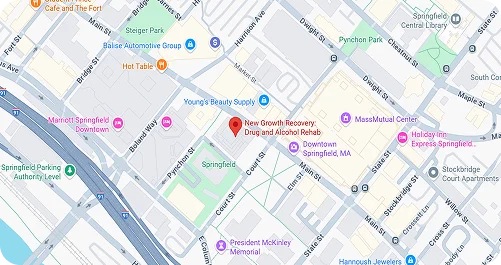
Centrally located in downtown Springfield, with easy access from Chicopee, Holyoke, Westfield, and Longmeadow.
Insurance-Friendly
Most plans are accepted, and benefits are verified quickly with clear cost explanations.
Respect and Privacy
Care is confidential, supportive, and judgment-free from first contact onward.
Trustindex verifies that the original source of the review is Google.
Great clinicians that know about their work personally and really care about their participants wonderful place to find great people to have in your recovery journey
Posted on Google
kelly pete
Trustindex verifies that the original source of the review is Google.
Thank You💐
Posted on Google
Delina
Trustindex verifies that the original source of the review is Google.
New Growth was an incredible support throughout my personal recovery journey. Their dedicated, compassionate staff bring lived experience, and the client-centered environment truly feels like a real community. I would confidently refer anyone I know or care about who is seeking support.
Posted on Google
Steven Turrini
Trustindex verifies that the original source of the review is Google.
New growth is a great program that helps get to the root of the issue. Tim is great and I think his alumni meeting keeps showing people trying that it works!!👏
Posted on Google
Arianna Palazzi
Trustindex verifies that the original source of the review is Google.
New Growth has made a huge difference in my life. The staff here is amazing, they truly care about your recovery and go above and beyond to support you. Tim’s groups specifically made a big impact on me and really helped me through my time in the program. I felt heard, supported, and encouraged every step of the way. I would absolutely refer anyone who’s looking for help to come here.
Posted on Google
Christopher
Trustindex verifies that the original source of the review is Google.
I had a amazing experience at New Growth Recovery Center and am grateful for the support I received during a difficult time in my life. The staff was compassionate, knowledgeable, and genuinely committed to helping clients through recovery. From the clinical team to the support staff, I felt respected and understood rather than judged.
The program offered a structured environment that helped me build healthier habits and better understand my substance use. Group sessions were especially impactful, providing a sense of community and connection with others facing similar challenges. I also appreciated the individualized attention in counseling sessions, which allowed me to work through personal issues at my own pace.
Posted on Google
Timothy McCarthy
Trustindex verifies that the original source of the review is Google.
New Growth was an amazing support in my personal recovery journey. Committed, compassionate staff with lived experience and a client culture that resembles real community. would refer to anyone I know/love seeking support.
Posted on Google
Billy Stoddard
Trustindex verifies that the original source of the review is Google.
Evan and the staff at New Growth have a very welcoming facility. It’s spacious and well kept. The clinical staff does a great job engaging and giving their clients the care they deserve. New Growth is my first call when anyone needs substance use outpatient resources in western MA
Posted on Google
Shannon Gillick
Trustindex verifies that the original source of the review is Google.
Best program I've ever been involved with! The staff our earth angels!!! Very beneficial programming and activities! I love New Growth Recovery! I thank God for making it possible for this kind of support and compassion!!!
DBT Skills We Teach
Our DBT therapists focus on practical, real-world tools, including:
“When I pass the liquor aisle, text sponsor, buy list-only, and keep checkout under 10 minutes.”
Family Involvement
Addiction affects the whole family. We invite loved ones to education nights and family sessions to rebuild trust, set healthy boundaries, and align on relapse-prevention roles.
Getting Started
Beginning DBT therapy is designed to be straightforward and supportive.
1
Schedule an assessment
2
Verify insurance benefits
3
Develop a personalised treatment plan
Same-day assessments are available when scheduling permits.
Costs, Insurance, and Accessibility
You’ll receive treatment through most insurance providers, including MassHealth and out-of-network coverage. Get verification within 2 hours from our admissions team.
Yes, research shows that DBT can be effective for addiction treatment. DBT is an evidence-based therapy that supports recovery by strengthening emotional regulation and impulse control.
How many DBT sessions do I need?
Many DBT programmes follow a structured skills curriculum that typically runs for about 24 weeks, often combining weekly individual sessions with skills-based group work.
However, duration varies depending on your individual needs, treatment goals, and level of care.
How fast will I see results with DBT?
Many individuals experience early improvements, with deeper progress developing over time.
Can DBT be combined with 12-Step programs?
Yes. DBT therapy often complements peer support programs.
Can I do DBT while taking medication?
Yes. DBT can work alongside medication when clinically appropriate.
Do you offer DBT through telehealth in Massachusetts?
Yes. Our virtual outpatient program is available for Massachusetts residents and includes DBT among the therapy options offered online. Virtual sessions use HIPAA-compliant Google Meet.
Will I have homework in DBT?
Yes. DBT includes brief skills practice between sessions, designed to help you apply what you learn in real-life situations. These exercises strengthen coping strategies, improve emotional regulation, and support lasting behavioral change.
What if therapy hasn’t worked for me before?
Many people find DBT helpful after other approaches because it is highly structured, practical, and focused on building real-world coping skills. Rather than focusing solely on challenges, DBT emphasises learning and applying tools that support emotional stability and behavioral change.
Can family members join DBT sessions?
With consent and when appropriate, family participation may be included.
Is DBT covered by insurance?
Coverage varies by plan, but many insurance providers cover therapy within outpatient or day treatment programs. Benefits can be verified confidentially before you start.
Disclaimer: Customer reviews may be paraphrased for clarity and brevity.
Insurance Questions? Let’s Clear the Path to Your Recovery!
Please fill out the form below. You’ll typically receive a call within a couple of hours, and always within 24 hours. We’re here to help you every step of the way.